


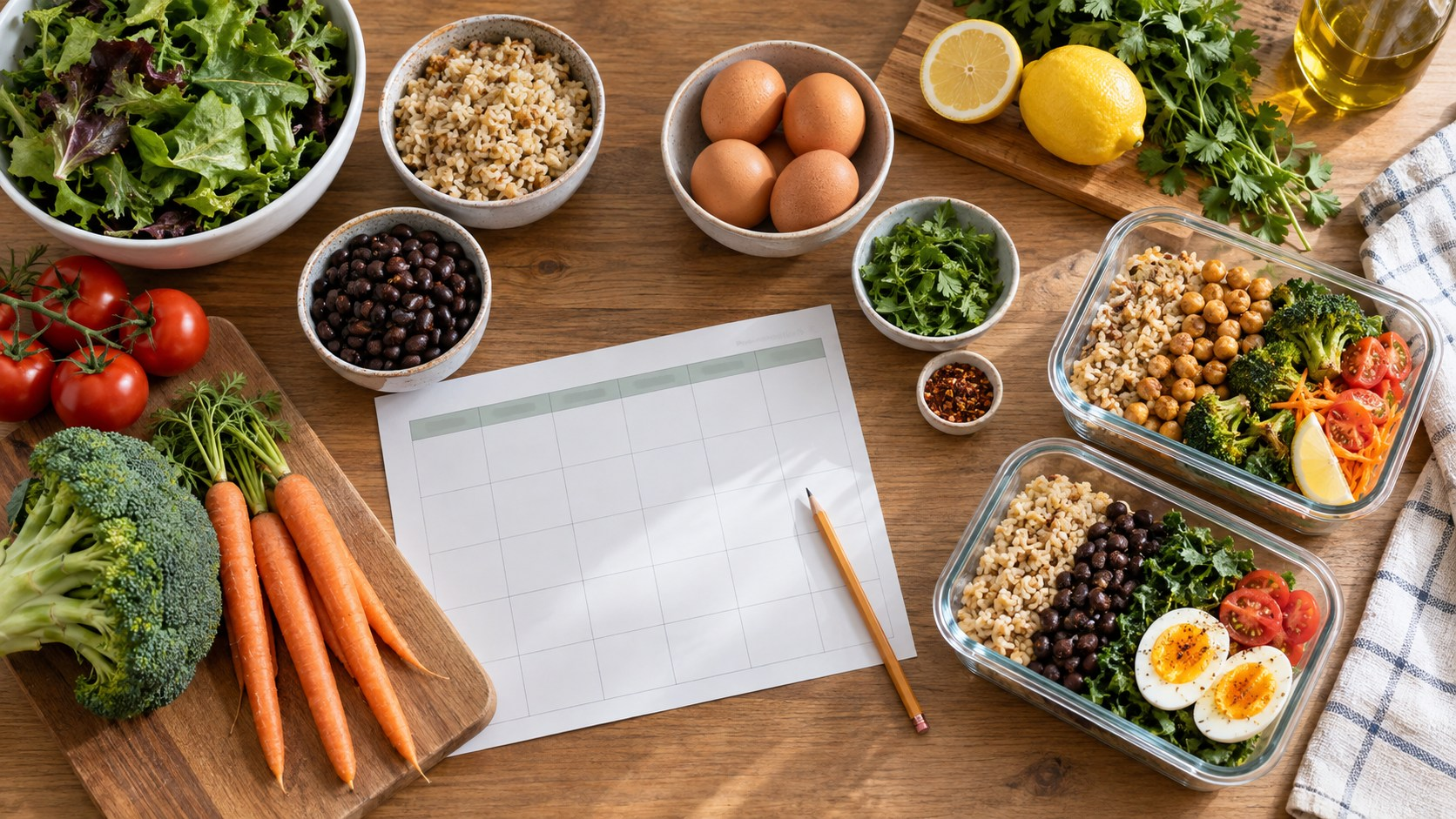
Meal planning does not mean cooking seven different dinners on Sunday or following a rigid calendar. For beginners, it simply means deciding what you are likely to eat before you shop. A good plan reduces last-minute decisions, shortens grocery trips, and gives every perishable ingredient a purpose.
The easiest system is flexible: plan a few reliable meals, leave room for leftovers, and keep one backup option for busy days. Here is how to build that system without turning food into another weekly chore.
Start With Your Real Schedule
Before choosing recipes, look at the week ahead. Mark late workdays, social plans, school activities, and evenings when you will not want to cook. Planning seven full dinners when you will eat at home only four times creates unnecessary work and excess groceries.
Choose meal types that match the time available:
- Busy nights: Sandwiches, omelets, grain bowls, soup, or planned leftovers
- Normal nights: Simple meals that take about 30 minutes
- Flexible nights: Meals built around ingredients that need to be eaten soon
- Free evenings: A larger meal that provides extra portions
USDA MyPlate recommends considering your available time and saving more involved cooking for days when you have help or fewer commitments.
Shop Your Kitchen First
Check the refrigerator, freezer, and pantry before writing your plan. Look for produce that is losing freshness, open packages, leftovers, and ingredients that have been sitting unused.
Create a short “use first” list. A half bag of spinach, two carrots, and an open container of yogurt could become an omelet, a soup, and a quick sauce. Starting with food you already own prevents duplicate purchases and makes the first few meals easier to choose.
The U.S. Environmental Protection Agency recommends planning meals around food already at home and writing shopping quantities based on the number of meals you expect to prepare. A sale is not a saving if half the food is eventually thrown away.
Choose Three Anchor Meals
Beginners often plan too many recipes. Start with three anchor meals rather than seven unrelated dinners. Select meals your household already enjoys and build them around ingredients that can appear more than once.
For example:
- Roasted chicken or chickpea grain bowls with rice, broccoli, and carrots
- Vegetable pasta using broccoli, tomatoes, and spinach
- Tacos or wraps using the remaining chicken or chickpeas, vegetables, and yogurt sauce
These meals feel different, but the shopping list stays short. Reusing ingredients is one of the simplest ways to reduce cost and waste without eating the same dish every night.
Add one pantry or freezer backup, such as soup, frozen dumplings, pasta with canned tomatoes, or eggs on toast. This backup protects the plan when your day changes unexpectedly and reduces the temptation to order food while fresh groceries remain unused.
Build a Smarter Grocery List
Turn the meal plan into a shopping list, then cross off everything you already have. Organize what remains by store section: produce, protein, dairy, pantry, and frozen foods. This makes shopping faster and reduces impulse purchases.
Include quantities whenever possible. Write “four apples” instead of “fruit” and “spinach for two meals” instead of “greens.” Consider how many people will eat each dish and whether you want leftovers.
A practical weekly basket normally contains a mixture of:
- Fresh foods to eat early in the week
- Longer-lasting vegetables such as carrots or cabbage
- Frozen produce for later meals
- Pantry staples such as rice, pasta, beans, and canned tomatoes
- One or two flexible protein sources
Buying in bulk only saves money when the food can be used or frozen before it spoils.
Prep Components, Not Entire Meals
Meal preparation does not need to consume an entire afternoon. Spend 30 to 45 minutes preparing the components that will remove friction during the week.
You might cook a pot of rice, wash sturdy vegetables, make a sauce, roast a tray of vegetables, or portion snacks. Leave delicate greens and cut fruit until closer to serving when that helps preserve their quality.
Component preparation provides more flexibility than assembling five identical containers. Cooked rice can become a grain bowl, a side dish, or fried rice. Roasted vegetables can go into pasta, wraps, salads, or eggs.
One prepared ingredient can save time without locking you into one meal.
Plan Leftovers on Purpose
Leftovers should have an appointment. Label one lunch or dinner in your plan as “leftovers” instead of hoping someone eventually eats them. Store food in clear containers and place older items where they are easy to see.
Turn leftovers into a new format when repetition becomes boring:
- Roasted vegetables can become soup or pasta sauce.
- Cooked chicken can become wraps, salad, or fried rice.
- Rice can become a breakfast bowl or quick stir-fry.
- Fresh herbs can become pesto, dressing, or freezer cubes.
For safety, refrigerate perishable food promptly. FoodSafety.gov recommends refrigerating cooked food and leftovers within two hours—or within one hour when food has been exposed to temperatures above 90°F (32°C).
Keep the refrigerator at 40°F (4°C) or below and generally use refrigerated leftovers within three to four days. Freeze portions you will not eat within that period.
A Simple Five-Day Meal Plan
Here is an adaptable example for one or two beginners.
Monday
Prepare grain bowls with rice, chickpeas or chicken, roasted broccoli, carrots, and yogurt-herb sauce.
Cook enough rice and vegetables to use in other meals later in the week.
Tuesday
Make vegetable pasta with tomatoes, spinach, and some of the leftover broccoli. Prepare one additional portion for lunch.
Wednesday
Schedule a planned leftover night. Eat the oldest prepared food first and freeze anything you will not finish within the recommended storage period.
Thursday
Prepare tacos or wraps with the remaining protein, vegetables, and yogurt-herb sauce.
Changing the format and seasonings makes familiar ingredients feel like a different meal.
Friday
Create a flexible “use-it-up” dinner. Depending on what remains, this could be an omelet, soup, stir-fry, pasta dish, or grain bowl.
Keep the weekend open for eating out, cooking a longer recipe, or repeating a favorite meal. Flexibility makes a meal plan sustainable.
Common Meal-Planning Mistakes
Choosing Too Many Unrelated Recipes
Avoid selecting several recipes that require completely different ingredients. This produces a long shopping list and leaves small quantities of food unused.
Choose meals that share two or three core ingredients while using different sauces, seasonings, or cooking methods.
Planning Every Meal
Do not schedule every meal without leaving room for changes. One leftover night and one backup meal make the plan more realistic.
A plan should guide your decisions, not make you feel that the entire week has failed when one dinner changes.
Preparing Too Much Food
Do not fill every meal-prep container simply because it is available. Prepare portions according to the number of meals you will actually eat.
If you accidentally cook too much, freeze suitable portions while they are still fresh instead of waiting until they are almost ready to be discarded.
Expecting Perfection
Do not judge your meal plan by whether you followed it perfectly. Judge it by whether you made fewer rushed decisions, used more of what you purchased, and spent less time wondering what to cook.
Frequently Asked Questions
How Many Days Should a Beginner Plan?
Start with three to five days. A shorter plan is easier to adjust and reduces the risk of buying more fresh food than you can use.
Once the process becomes familiar, you can gradually plan more of the week.
Is Meal Planning the Same as Meal Prep?
No. Meal planning means deciding what you will eat and what groceries you need.
Meal prep means preparing ingredients or complete meals in advance. You can plan effectively without batch-cooking everything.
How Can I Avoid Eating the Same Food Every Day?
Reuse components instead of repeating complete dishes. The same rice, vegetables, and protein can become a grain bowl, wrap, soup, salad, or stir-fry when paired with different sauces and seasonings.
What Should I Do When the Plan Changes?
Move highly perishable ingredients to the next available meal, freeze what can be frozen, and use your pantry backup.
A flexible plan should absorb changes rather than collapse because of them.
Does Meal Planning Really Reduce Food Waste?
It can reduce waste when the plan reflects how many meals you will actually eat at home. Checking existing supplies, buying specific quantities, planning leftovers, and freezing unused portions all help prevent food from being forgotten.